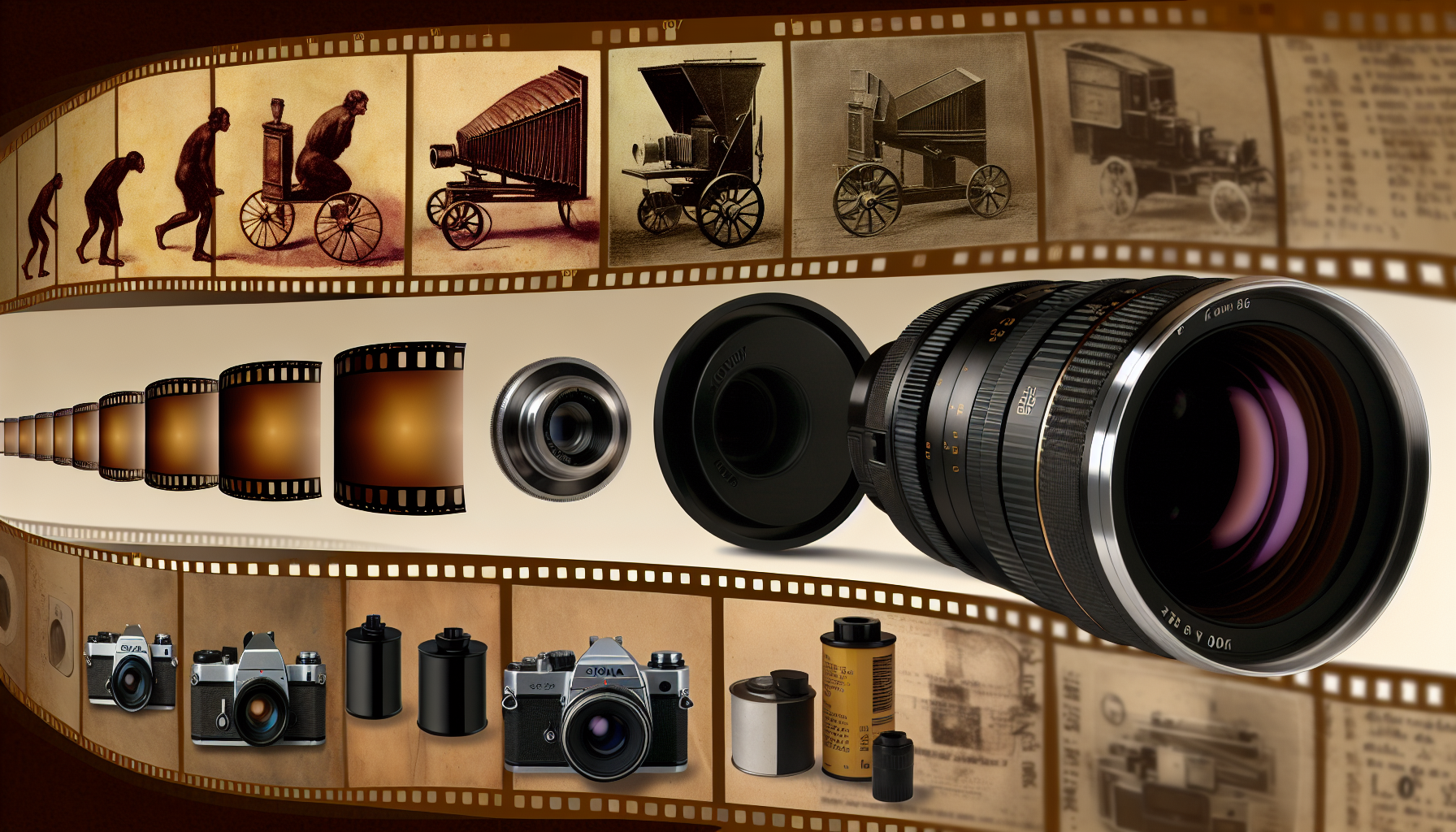
Photography has transformed incredibly from its humble beginnings rooted in ancient techniques to a powerful digital medium. This article delves into the historical journey of photography, highlighting key innovations and techniques that have defined the art of capturing images.
The Origins of Photography
The early history of photography reveals a fascinating journey from the rudimentary concepts of image capture to the sophisticated methods that would ultimately shape the visual medium. It begins long before the invention of cameras, with the principles of the camera obscura—an ancient device that projected the image of an external scene onto a surface within a darkened room. The camera obscura operated on the simple premise that light travels in straight lines, allowing a small hole to admit light, which formed an inverted image on the opposite wall. This principle was known to philosophers like Aristotle, but it was extensively explored during the Renaissance, inspiring many artists to create life-like depictions of the world around them.
In the 18th century, innovators began to experiment with substances sensitive to light. One of the early pioneers, Johann Heinrich Schulze, discovered in 1727 that a mixture of chalk, nitric acid, and silver could darken upon exposure to light. While his experiments did not result in permanent images, they laid the groundwork for future photographic techniques. Concurrently, Thomas Wedgwood conducted similar research, creating silhouettes on paper covered with light-sensitive chemicals. His endeavors, however, too fell short of creating lasting images, as he lacked methods to fix the exposures once captured.
A significant leap forward came in the early 19th century with Nicéphore Niépce, who successfully captured the first permanent photograph in 1826 or 1827. Using a pewter plate coated with bitumen of Judea, Niépce created an image through a lengthy exposure in the camera obscura, resulting in a view from his window known as “View from the Window at Le Gras.” This breakthrough moved photography closer to practicality, although the exposure time would last several hours—hence, images were often blurred or devoid of movement.
Niépce’s partnership with Louis Daguerre marked another pivotal moment in photographic history. Following Niépce’s death, Daguerre took his findings and developed the daguerreotype process in 1839. This innovative method shortened exposure times dramatically and produced sharp, detailed images on polished silver plates. The daguerreotype’s popularity surged, propelling photography into the public consciousness and representing a monumental shift in both art and documentation. This evolution laid the foundation for modern techniques and set the stage for photography to emerge as a dominant form of visual communication.
Transition to Modern Photography Techniques
The advent of the daguerreotype in the early 19th century marked a turning point in the history of photography, but it was the innovations that followed that truly revolutionized the medium. One significant progression was the introduction of the collodion process in the 1850s. This technique utilized a glass plate coated with a bed of collodion, a thick syrupy solution, which was sensitized to light with silver nitrate. The collodion process allowed photographers to produce negatives that were sharper and more detailed than the daguerreotypes, which were single plates. Moreover, it was a wet-plate process, requiring the photographer to develop the image immediately after exposure. Although this approach posed logistical challenges, it paved the way for the birth of studio photography and portraiture as it became easier to capture images with greater clarity and depth.
By the late 19th century, the introduction of roll film further democratized photography. Invented by George Eastman in 1888, this innovation eliminated the cumbersome glass plates used in earlier techniques. Eastman’s Kodak camera came preloaded with a roll of flexible film, allowing amateur photographers to take their pictures without complex setup or knowledge of developing processes. “You press the button, we do the rest” became a famous slogan that emphasized the accessibility of photography to the masses. This marked a significant cultural shift, transforming photography into a popular pastime and an art form that could be enjoyed by everyone, not just the elite or professional image-makers.
The transition to color photography was another pivotal moment, though its journey was incremental and fraught with challenges. Early attempts at color photography, such as the Autochrome plate developed by the Lumière brothers in 1907, utilized separate color grains of starch, yet it was the societal demand for color that led to further innovations. The Kodak Color film introduced in the mid-20th century finally provided photographers with an efficient means to capture vivid images.
As the 20th century progressed, technological advancements culminated in the digital revolution. The invention of the digital camera in the 1970s, paired with the ongoing refinement of image sensors and high-capacity memory, shifted the paradigms of photography once again. With digital photography, capturing, editing, and sharing images became instantaneous, leading to the ubiquitous use of cameras in everyday life through smartphones and digital devices. This evolution from cumbersome processes to intuitive digital interfaces marks the profound transformation of photography as it exists today, emphasizing accessibility, immediacy, and creativity for all.
Conclusions
In conclusion, the evolution of photography from its ancient origins to the digital era showcases the fusion of art and technology. Understanding this journey not only enhances our appreciation of photography but also underscores its role in shaping visual culture in modern society.
Leave a Reply